Skip to content
  • Home
  • Resources
    • Resource List
  • STEM Courses
    • STEM Educators
    • за STEM образователни работници
    • Professores STEM
    • Educatori STEM
    • εκπαιδευτές STEM
    • За STEM едукатори
    • All Courses
  • STEM Community Hubs
    • STEM in Cyprus
    • STEM in Lithuania
    • STEM in Greece
    • STEM in Italy
    • STEM in Portugal
    • STEM in North Macedonia
    • STEM in Bulgaria
  • Login
  • Register
  • Contacts
  • en_GBEnglish (UK)
    • elΕλληνικά
    • mk_MKМакедонски јазик
    • it_ITItaliano
    • pt_PTPortuguês
    • bg_BGБългарски
    • lt_LTLietuvių kalba
Menu
  • Home
  • Resources
    • Resource List
  • STEM Courses
    • STEM Educators
    • за STEM образователни работници
    • Professores STEM
    • Educatori STEM
    • εκπαιδευτές STEM
    • За STEM едукатори
    • All Courses
  • STEM Community Hubs
    • STEM in Cyprus
    • STEM in Lithuania
    • STEM in Greece
    • STEM in Italy
    • STEM in Portugal
    • STEM in North Macedonia
    • STEM in Bulgaria
  • Login
  • Register
  • Contacts
  • en_GBEnglish (UK)
    • elΕλληνικά
    • mk_MKМакедонски јазик
    • it_ITItaliano
    • pt_PTPortuguês
    • bg_BGБългарски
    • lt_LTLietuvių kalba

Desafios

PESQUISAR

Pesquisar

AUTOR

TÓPICOS

PALAVRAS-CHAVE

LÍNGUA

DURAÇÃO

DIFICULDADE

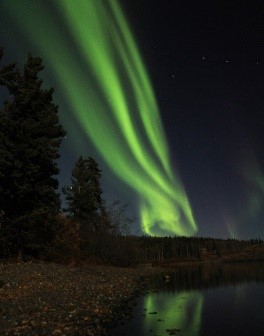
Make an aurora with photography

An aurora, sometimes referred to as polar lights (aurora polaris), northern lights (aurora borealis), or southern lights (aurora australis), is a natural light display in the Earth’s sky, predominantly seen in high-latitude regions (around the Arctic and Antarctic). Auroras are the result of disturbances in the magnetosphere caused by solar wind. These disturbances are sometimes strong enough to alter the trajectories of charged particles in both solar wind and magnetospheric plasma. These particles, mainly electrons and protons, precipitate into the upper atmosphere. This activity can be developed individually by learners or as a pair activity (2 learners). Teacher shall maintain a close screw of the work performed by the learners.


Northern lights

Source https://www.instructables.com/Northern-Lights-Photography/
Christina Taka

AUTHOR

  • December 9, 2020

PUBLISH DATE

View Resource

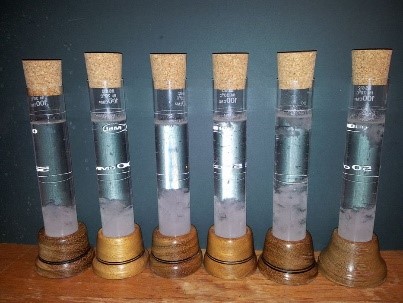
Construction of a Storm Glass

The storm glass or chemical weather glass was an instrument which was proposed as a method for predicting weather. It consisted of a special liquid placed inside a sealed transparent glass. The state of crystallization within the liquid was believed to be related to the weather. The inventor is unknown but the device became popular in the 1860s after being promoted by Admiral Robert FitzRoy who claimed that “if fixed, undisturbed, in free air, not exposed to radiation, fire, or sun, but in the ordinary light of a well-ventilated room or outer air, the chemical mixture in a so-called storm-glass varies in character with the direction of the wind, not its force, specially (though it may so vary in appearance only) from another cause, electrical tension”. This activity can be developed individually by learners or as a pair activity (2 learners) that shall be focused on the positive use of the Fitzroy storm glass. Teacher shall maintain a close screw of the work performed by the learners.


Fitzroy Storm Glass

Sourcehttp://inhabitat.com)

Christina Taka

AUTHOR

  • December 9, 2020

PUBLISH DATE

View Resource

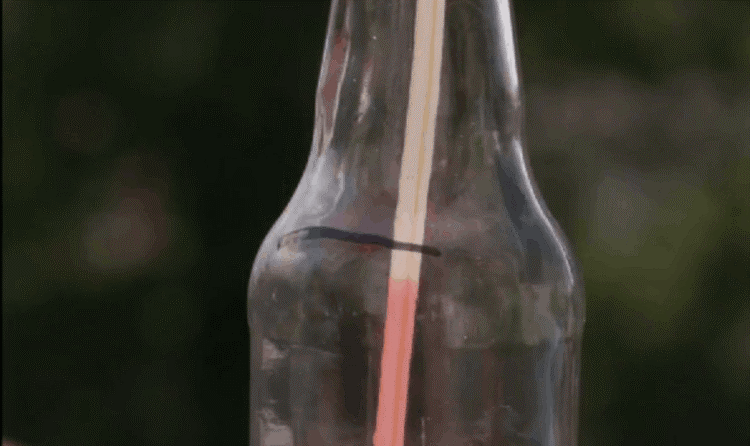
How to make a bottle thermometer

Meteorologists, or weather scientists, use special tools for checking the current temperature and predicting what the temperature might be later in the day or week. At home, we can use a tool called a thermometer to measure the air temperature. By completing this activity, you can better understand that the air temperature changes day-to-day and can learn more about tools to track these changes. This activity can be developed individually by learners that shall be focused on the use of weather tools. Teacher shall maintain a close screw of the work performed by the learners.


A bottle thermometer

Source https://www.pbs.org/parents/crafts-and-experiments/make-a-bottle-thermometer

Christina Taka

AUTHOR

  • December 9, 2020

PUBLISH DATE

View Resource

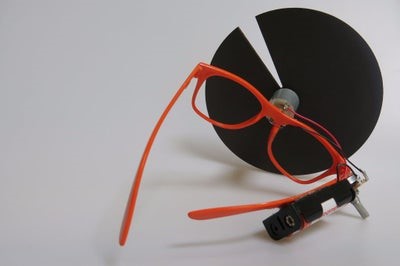
Making stroboscopic goggles

While strengthening the muscles and perfecting physical maneuvers is pivotal to the success of athletes around the world, improving brain functionality is important, too. Several studies have shown that well-trained athletes think and see the world around them a bit differently than non-athletes. When you think about how the body works during a fast-paced sports game, the idea is not as far-fetched as it originally seems. The connection between the eyes, brain, and body plays a very important role in how you react to stimulants you see. It’s that cycle of information that’s responsible for affecting how you move. This activity can be developed individually by learners. Teachers shall maintain a close screw of the work performed by the learners.


Strobe Goggles

Source https://www.instructables.com/id/Strobe-Goggles/

Christina Taka

AUTHOR

  • December 9, 2020

PUBLISH DATE

View Resource

Image processing using MATLAB

This is fun project based on image processing with MATLAB, here we will come accross learing how to count the number of distinguishable objects in an image. The following tutorial is performed with the help of MATLAB. MATLAB stands for “MATrix LABoratory” and is a numerical computing environment and fourth-generation programming language, developed by MathWorks. Using MATLAB, we can solve technical computing problems faster than with traditional programming languages, such as C, C++, and Fortran. This activity can be developed individually by learners or as a pair activity (2 learners) that shall be focused on the use of MATLAB. Teacher shall maintain a close screw of the work performed by the learners. The tutorial can be performed by executing the commands in each step sequentially in the command window of MATLAB.

An original image

Source https://www.instructables.com/Image-Processing-and-Counting-using-MATLAB/

Christina Taka

AUTHOR

  • December 9, 2020

PUBLISH DATE

View Resource

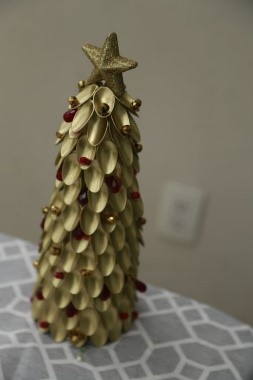
Christmas tree using recycled components

Decorating your home for next Christmas can be easy with recycled materials. This tree is easy and cheap to create and the final result looks sophisticated and elegant. Nobody will believe it! Here we used mini plastic spoons and some beads that can be the ones you get as remnant from your jewellery projects. This activity can be developed individually by learners or as a pair activity (2 learners) that shall be focused on the positive use of recycled material. Teacher shall maintain a close screw of the work performed by the learners.


A Christmas tree from recycled material

Source https://www.instructables.com/Recycled-Materials-XMas-Tree/

Christina Taka

AUTHOR

  • December 9, 2020

PUBLISH DATE

View Resource
« Prev Page1 … Page74 Page75 Page76 Page77 Next »

The European Commission support for the production of this publication does not constitute an endorsement of the contents which reflects the views only of the authors, and the Commission cannot be held responsi­ble for any use which may be made of the information contained therein.

Copyright © 2022 SAPPHIRE • All rights reserved

SAPPHIRE Website
en_GBEnglish (UK)
bg_BGБългарски pt_PTPortuguês it_ITItaliano lt_LTLietuvių kalba mk_MKМакедонски јазик elΕλληνικά en_GBEnglish (UK)