Skip to content
  • Home
  • Resources
    • Resource List
  • STEM Courses
    • STEM Educators
    • за STEM образователни работници
    • Professores STEM
    • Educatori STEM
    • εκπαιδευτές STEM
    • За STEM едукатори
    • All Courses
  • STEM Community Hubs
    • STEM in Cyprus
    • STEM in Lithuania
    • STEM in Greece
    • STEM in Italy
    • STEM in Portugal
    • STEM in North Macedonia
    • STEM in Bulgaria
  • Login
  • Register
  • Contacts
  • en_GBEnglish (UK)
    • elΕλληνικά
    • mk_MKМакедонски јазик
    • it_ITItaliano
    • pt_PTPortuguês
    • bg_BGБългарски
    • lt_LTLietuvių kalba
Menu
  • Home
  • Resources
    • Resource List
  • STEM Courses
    • STEM Educators
    • за STEM образователни работници
    • Professores STEM
    • Educatori STEM
    • εκπαιδευτές STEM
    • За STEM едукатори
    • All Courses
  • STEM Community Hubs
    • STEM in Cyprus
    • STEM in Lithuania
    • STEM in Greece
    • STEM in Italy
    • STEM in Portugal
    • STEM in North Macedonia
    • STEM in Bulgaria
  • Login
  • Register
  • Contacts
  • en_GBEnglish (UK)
    • elΕλληνικά
    • mk_MKМакедонски јазик
    • it_ITItaliano
    • pt_PTPortuguês
    • bg_BGБългарски
    • lt_LTLietuvių kalba

Etkinlikler

Ara

Arama

Yazar

Konular

Anahtar Kelimeler

Dil

Süre

Zorluk

Into a STEM/STEM-like class (copy)

STEM education intends to encourage students to acquire the information, skills, and competences that are in need in the technology industry, as well as to contribute to their successful future realization. This is related to a new learning process organization, new teaching methods, new and integrated learning content, and teacher development and retraining.

The main goal is to improve students’ STEM skills, achievements, and engagement by providing opportunities for project-based learning and integrative knowledge, as well as to increase students’ interest in scientific topics and their willingness to continue their education in university specialties and work in the technology industry.

STEM lessons resemble science experiments and teaching in various ways. Genuine science experiences, after all, are inquiry-based and hands-on. However, there are also significant variances in the fundamentals of an “ideal” STEM session.

Here are six characteristics of a great STEM lesson:

-STEM lessons are focused with real-life difficulties and problems. Students confront real-world social, economic, and environmental issues and seek solutions in STEM classes.
-STEM lessons are guided by the engineering design process. This provides a flexible process that takes students from identifying a problem-or a design challenge-to creating and developing a solution and trying their own research-based ideas.
-STEM lessons immerse students in hands-on inquiry and open-ended exploration. The learning path in STEM lessons is open-ended but constrained. (Generally, constraints include things like available supplies.)
-STEM lessons encourage students to work together to solve problems.
-STEM lessons help students apply what they’ve learned in math and science. Students can thus realize that science and math are not separate courses, but rather that they work together to solve issues.
-STEM lessons allow for multiple right answers and reframe failure as a necessary part of learning. Failure is considered a positive step on the way to discovering and designing solutions.

Galia Tsankova

AUTHOR

  • July 1, 2022

PUBLISH DATE

View Resource

Popsicle Stick Catapult STEM Challenge (copy)

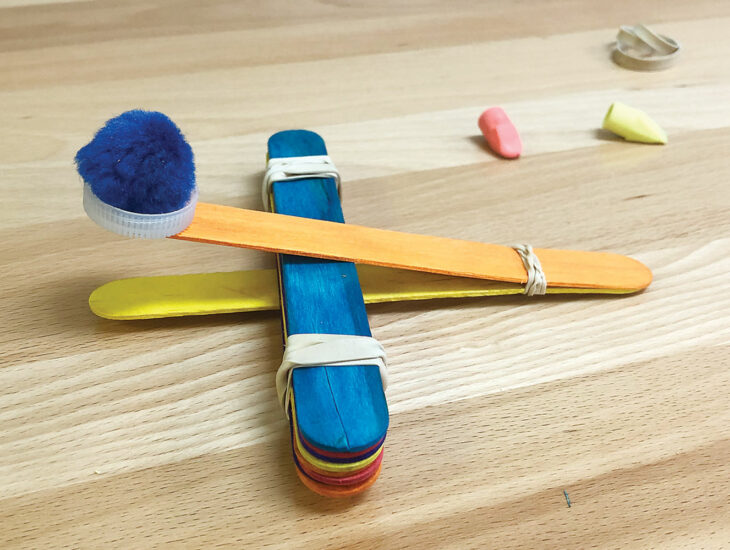
This Popsicle stick catapult is a fantastic STEM activity for children of all ages!

Exploring physics has never been more exciting for children because everyone enjoys launching objects into the air. A popsicle stick catapult is an excellent kids’ activity for learning basic physics.

-We will use technology to help us build our simple catapults.
-We’ll use math to figure out what materials we’ll need to make the catapults.
-We will use our engineering skills to build the popsicle stick catapults.
-We’ll use science to see how far the catapults threw the items we chose.

SUPPLIES:
-10 Jumbo Popsicle Sticks
-Rubber Bands
-Firing Power (marshmallows, pompoms, pencil top erasers)
-Plastic Spoon (optional
-Bottle Cap
-Sticky Dots

Tome Dimovski

AUTHOR

  • June 28, 2022

PUBLISH DATE

View Resource

Popsicle Stick Catapult STEM Challenge

This Popsicle stick catapult is a fantastic STEM activity for children of all ages!

Exploring physics has never been more exciting for children because everyone enjoys launching objects into the air. A popsicle stick catapult is an excellent kids’ activity for learning basic physics.

-We will use technology to help us build our simple catapults.
-We’ll use math to figure out what materials we’ll need to make the catapults.
-We will use our engineering skills to build the popsicle stick catapults.
-We’ll use science to see how far the catapults threw the items we chose.

SUPPLIES:
-10 Jumbo Popsicle Sticks
-Rubber Bands
-Firing Power (marshmallows, pompoms, pencil top erasers)
-Plastic Spoon (optional
-Bottle Cap
-Sticky Dots

Monica Nicolodi

AUTHOR

  • May 11, 2022

PUBLISH DATE

View Resource

Gumdrop Bridge STEM Challenge

A gumdrop toothpick bridge is an excellent STEM (science, technology, engineering, and mathematics) activity for children! STEM activities provide numerous opportunities for math and science learning, as well as creativity and fine motor skills.

Setup is extremely simple! This bridge-building activity requires only two materials: gumdrops and toothpicks. Gumdrops can be used, but the possibilities are endless: marshmallows, apple pieces, cheese, Styrofoam, play dough, and so on!

Monica Nicolodi

AUTHOR

  • May 11, 2022

PUBLISH DATE

View Resource

LEGO Water Experiment For Kids

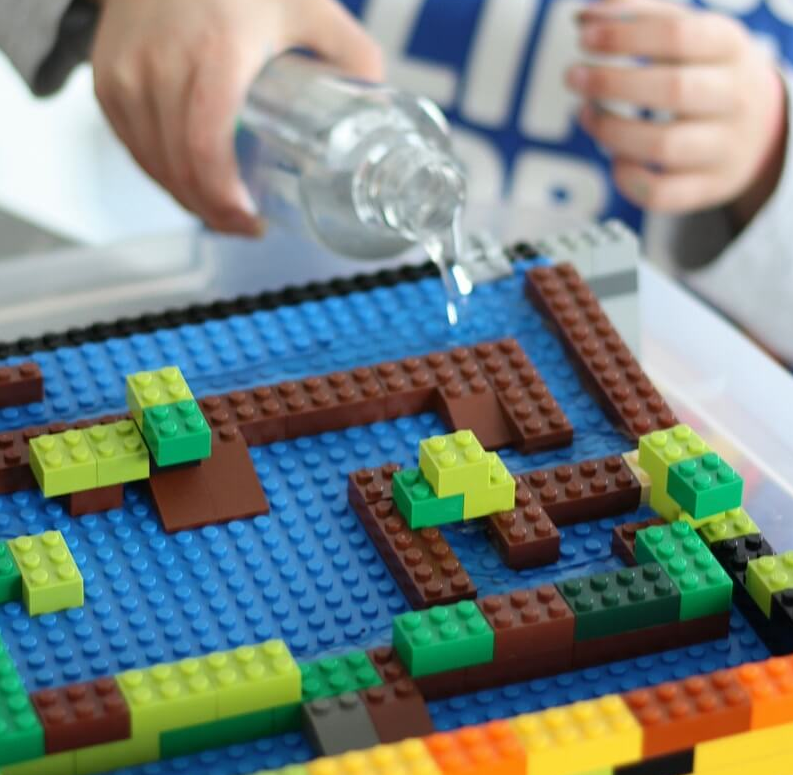
Building dams is an excellent hands-on STEM activity for children that makes use of a favourite building material, LEGO! This is an at-home version of a popular museum activity for children.
Kids will be able to build dams and explore the water flow!

What you need:
LEGO base Plate
LEGO 2×2 and 2×4 Bricks
LEGO Slopes {assorted sizes}
LEGO Hinged Pieces {2}
Tray or Shallow Bin {to catch water}
Bottle of Water {to test your design}

Monica Nicolodi

AUTHOR

  • May 11, 2022

PUBLISH DATE

View Resource

STEM-like classes: Programming with educational environment-related games

In today’s world, the ability to code computer programs is an important part of literacy. When people learn to code, they learn key problem-solving, project-design, and communication strategies.

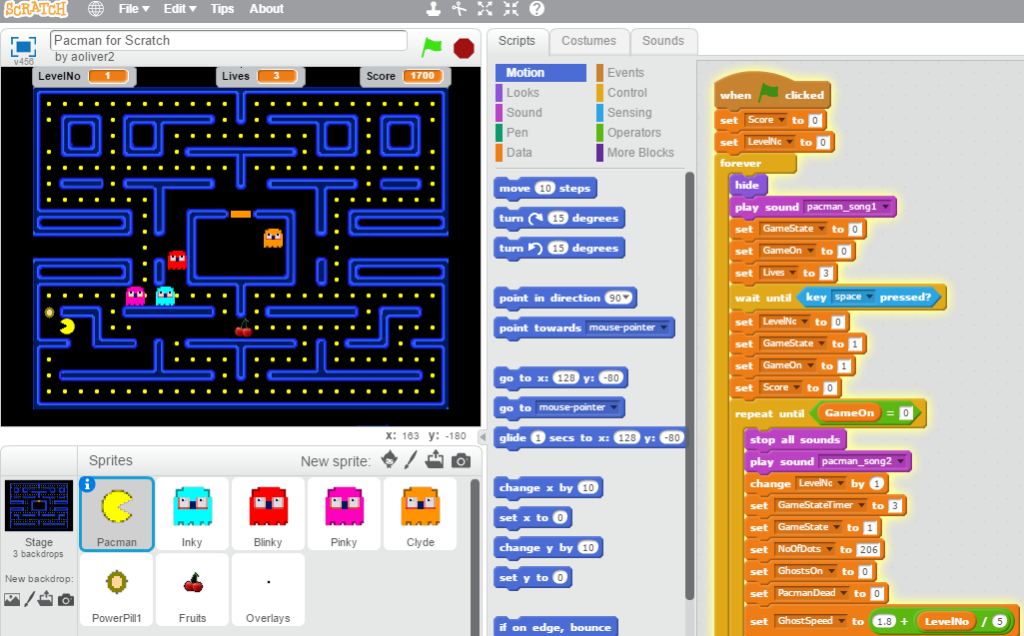
Scratch is the most popular and easiest program for students who are new to programming. It’s a free programming language and online community that allows users to create interactive stories, games, and animations. Scratch is a programming language for children aged 8 to 16.

Scratch encourages computational thinking and problem-solving abilities, as well as creative teaching and learning, self-expression and cooperation, and computer equity.

Monica Nicolodi

AUTHOR

  • May 11, 2022

PUBLISH DATE

View Resource
« Prev Page1 Page2 Page3 Page4 … Page77 Next »

The European Commission support for the production of this publication does not constitute an endorsement of the contents which reflects the views only of the authors, and the Commission cannot be held responsi­ble for any use which may be made of the information contained therein.

Copyright © 2022 SAPPHIRE • All rights reserved

SAPPHIRE Website
en_GBEnglish (UK)
bg_BGБългарски pt_PTPortuguês it_ITItaliano lt_LTLietuvių kalba mk_MKМакедонски јазик elΕλληνικά en_GBEnglish (UK)