Skip to content
  • Home
  • Resources
    • Resource List
  • STEM Courses
    • STEM Educators
    • за STEM образователни работници
    • Professores STEM
    • Educatori STEM
    • εκπαιδευτές STEM
    • За STEM едукатори
    • All Courses
  • STEM Community Hubs
    • STEM in Cyprus
    • STEM in Lithuania
    • STEM in Greece
    • STEM in Italy
    • STEM in Portugal
    • STEM in North Macedonia
    • STEM in Bulgaria
  • Login
  • Register
  • Contacts
  • en_GBEnglish (UK)
    • elΕλληνικά
    • mk_MKМакедонски јазик
    • it_ITItaliano
    • pt_PTPortuguês
    • bg_BGБългарски
    • lt_LTLietuvių kalba
Menu
  • Home
  • Resources
    • Resource List
  • STEM Courses
    • STEM Educators
    • за STEM образователни работници
    • Professores STEM
    • Educatori STEM
    • εκπαιδευτές STEM
    • За STEM едукатори
    • All Courses
  • STEM Community Hubs
    • STEM in Cyprus
    • STEM in Lithuania
    • STEM in Greece
    • STEM in Italy
    • STEM in Portugal
    • STEM in North Macedonia
    • STEM in Bulgaria
  • Login
  • Register
  • Contacts
  • en_GBEnglish (UK)
    • elΕλληνικά
    • mk_MKМакедонски јазик
    • it_ITItaliano
    • pt_PTPortuguês
    • bg_BGБългарски
    • lt_LTLietuvių kalba

Δραστηριότητες

Αναζήτηση

Αναζήτηση

Συγγραφέας

Θέματα

Λέξεις-Κλειδιά

Γλώσσα

Διάρκεια

Δυσκολία

Rocket Mania

In this challenge, students will construct rockets made from pipe insulating foam and use them to investigate the trajectory relationship between launch angle and range in a controlled setup. Students will follow the engineering design process to design and build the rocket and will figure out how to improve their design based on testing results and the related theoretical concepts.

This activity should be developed in groups of 3 learners. Teachers should help maintain the motivation of the learners particularly when they are struggling with their concept (the rocket does not move or moves randomly).
Carlos Vaz de Carvalho

AUTHOR

  • December 28, 2020

PUBLISH DATE

View Resource

Explore Earth and Space With Art

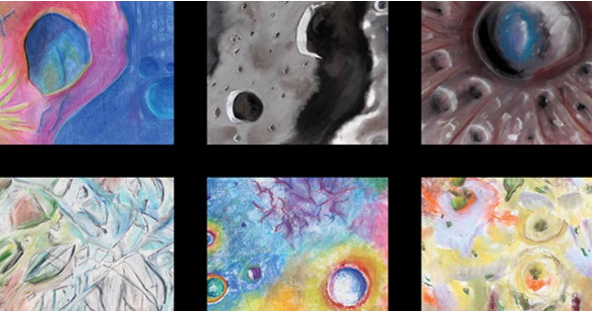
In this challenge, learners make sense of images of planets, asteroids, comets and moons, getting observation skills and inspiring questions. Learners of all ages create a beautiful piece of art while learning to recognize geologic and atmospheric features of solar system objects. The lesson begins with what we know here on Earth and then uses that awareness to help learners interpret features on distant objects in the solar system. Art and the Cosmic Connection is a two-part interdisciplinary program developed by artists and educators Monica and Tyler Aiello. Learners  learn to analyze images of planets and smaller bodies such as moons, comets and asteroids with basic art concepts, which parallel scientific practice. Flexible, can be scaled for informal education settings of all kinds. It can be broken learners into small groups that shall be mix up the class so they see others’ work.

Learn more about  Art and the Cosmic Connection at

http://www.eurekus.org

https://www.jpl.nasa.gov/edu/learn/project/explore-earth-and-space-with-art/


Fatma EROĞLAN

AUTHOR

  • December 28, 2020

PUBLISH DATE

View Resource

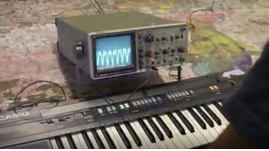
Music You Can See

In this activity, learners will learn the different characteristics of wave depending on frequency, wavelength and amplitude. This activity can be applied in a group or individually at class. Learners will learn how to attach a keyboard to an oscilloscopes. They will understand the different characteristics of wave depending on frequency, wavelength, and amplitude. Teachers can observe learners during application and pose some questions.

How waves are seen in oscilloscopes Source (https://www.instructables.com/Music-You-Can-See/)


Fatma EROĞLAN

AUTHOR

  • December 28, 2020

PUBLISH DATE

View Resource

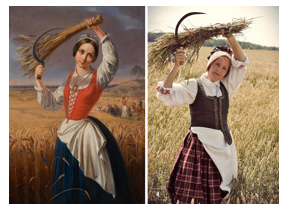
Funny Art Recreations

In this activity, learners will make their own piece of art alone or in a group and transform themselves into a piece of art selected.  They will get playful with art. This activity can be applied in a group of pairs or individually or can be applied individually at class. They will use their imagination and creativity to transform themselves into works of arts. Teachers can observe learners during application and pose some questions if in class. After the activity, learners will be allowed to take photos, post them on the internet and discuss the artist and its piece of art.

“The Reaper” by Kanuty Rusiecki. Recreated by Eglandas Višinskas

Source (https://mymodernmet.com/van-go-yourself-art-recreations/)


Fatma EROĞLAN

AUTHOR

  • December 28, 2020

PUBLISH DATE

View Resource

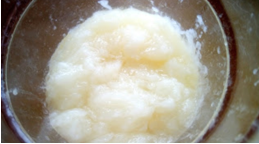
Eco-Protecting Soap

In this activity, learners will make their own natural soap with used oil with a very low cost and discover the effects of used oil on the nature. This activity should be applied partly at class partly at home. Learners will learn how to make ecologic soap by using used oil. Teachers can observe learners during application and pose some questions. After the preparation of the mixture, learners will be allowed to keep it at home for 6 weeks. After that, they will bring the soap at class and discuss their experiences.

Fatma EROĞLAN

AUTHOR

  • December 28, 2020

PUBLISH DATE

View Resource

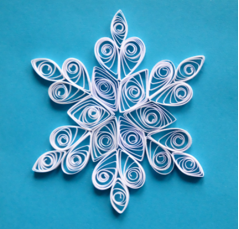
The Art Of Paper

In this activity, learners will make their own products with paper. This activity can be applied individually at class. Learners will learn some simple materials to make paper quilling and design their own decorations. Teachers can observe learners during application and pose some questions. After the preparation of paper quilling, learners will be allowed to show it to other peers and inspire them.

Fatma EROĞLAN

AUTHOR

  • December 28, 2020

PUBLISH DATE

View Resource
« Prev Page1 … Page69 Page70 Page71 Page72 Page73 … Page77 Next »

The European Commission support for the production of this publication does not constitute an endorsement of the contents which reflects the views only of the authors, and the Commission cannot be held responsi­ble for any use which may be made of the information contained therein.

Copyright © 2022 SAPPHIRE • All rights reserved

SAPPHIRE Website
en_GBEnglish (UK)
bg_BGБългарски pt_PTPortuguês it_ITItaliano lt_LTLietuvių kalba mk_MKМакедонски јазик elΕλληνικά en_GBEnglish (UK)