Skip to content
  • Home
  • Resources
    • Resource List
  • STEM Courses
    • STEM Educators
    • за STEM образователни работници
    • Professores STEM
    • Educatori STEM
    • εκπαιδευτές STEM
    • За STEM едукатори
    • All Courses
  • STEM Community Hubs
    • STEM in Cyprus
    • STEM in Lithuania
    • STEM in Greece
    • STEM in Italy
    • STEM in Portugal
    • STEM in North Macedonia
    • STEM in Bulgaria
  • Login
  • Register
  • Contacts
  • en_GBEnglish (UK)
    • elΕλληνικά
    • mk_MKМакедонски јазик
    • it_ITItaliano
    • pt_PTPortuguês
    • bg_BGБългарски
    • lt_LTLietuvių kalba
Menu
  • Home
  • Resources
    • Resource List
  • STEM Courses
    • STEM Educators
    • за STEM образователни работници
    • Professores STEM
    • Educatori STEM
    • εκπαιδευτές STEM
    • За STEM едукатори
    • All Courses
  • STEM Community Hubs
    • STEM in Cyprus
    • STEM in Lithuania
    • STEM in Greece
    • STEM in Italy
    • STEM in Portugal
    • STEM in North Macedonia
    • STEM in Bulgaria
  • Login
  • Register
  • Contacts
  • en_GBEnglish (UK)
    • elΕλληνικά
    • mk_MKМакедонски јазик
    • it_ITItaliano
    • pt_PTPortuguês
    • bg_BGБългарски
    • lt_LTLietuvių kalba

Δραστηριότητες

Αναζήτηση

Αναζήτηση

Συγγραφέας

Θέματα

Λέξεις-Κλειδιά

Γλώσσα

Διάρκεια

Δυσκολία

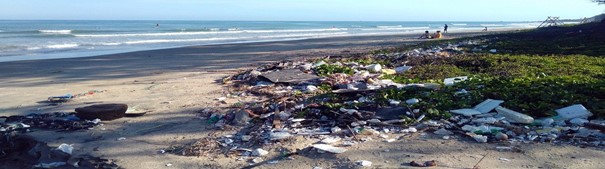
The Prevent Plastic Poster

Where does the plastic come from in the sea? A large part of the plastic that ends up in the sea is disposable packaging and plastic bags. In the sea, the plastic debris is slowly decomposed into smaller parts and eventually becomes so-called micro plastics, which are not broken down in several hundred years and which are almost impossible to capture. Lost fishing gear, synthetic fabrics, such as fleece blankets and polyester and acrylic clothing, release micro plastics when washed. Although the wastewater treatment plants handle most micro plastics, millions of micro plastics particles still end up in the sea. In addition, some hygiene products contain added micro plastics. Among other things, there may be plastic in exfoliating, toothpaste and makeup.Learners shall be aware of the importance of environment protection and instead of being powerless being able to find good ways to contribute in reducing plastic. What can I do?


This activity is a group work to collect knowledge about plastic in the sea and what an individual can do to prevent it. The advices should then be illustrated on a “poster or a any other communication model” with images or materials and with text that can be distributed within the local community ex the library or any other suitable centre. In this activity, there is no ready-made solution – only the imagination sets the boundaries.

This activity is divided in 2 days. Day 1. Plan and design

Day 2, The actual production. It would be good if it could be located in an art studio or similar, where there is access to glue, paints, cardboard, computer and printers etc.

WiTECSweden

AUTHOR

  • January 28, 2021

PUBLISH DATE

View Resource

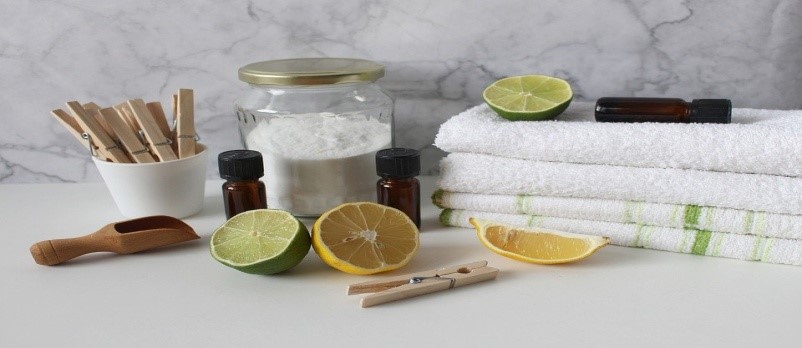
The art of cleaning your home without toxins

What is a detergent? All detergents contain, in addition to water and a mixture of a variety of chemicals. It can be surfactants, corrosive acids / alkalis, solvents, preservatives, abrasives, paint and perfume. Detergent residues are hazardous waste. Acids are corrosive (low pH). Phosphoric acids and nitric acid are examples of acids that can be included in detergents and can be found in toilet cleaners and lime removers. Acids irritate the skin and eyes and can cause burns. Alkalis are also corrosive (high pH). Potassium and sodium hydroxide are examples of alkalis that can be contained in detergents and are present in oven cleaners and stoppers. Another example is sodium hypochlorite, which is found in chlorine. Alkalis, like acids, are corrosive and thus irritate the skin and eyes and can also cause burns.

Miva (Environment and Water in Örnsköldsvik AB) SE.

In Sweden, with about 10 million inhabitants, we bought detergents for € 4.5 million in 2016. It causes a great strain on our environment. We now have domestic eco-labels in addition to EU labeling that facilitate our choices.


This activity is designed to increase consumer awareness of chemicals we are exposed to in the home through our detergents and how to make our own from our pantry. The teacher’s task is to teach about eco-label of products that are available in the country in which you are located and which forums exist to influence for more environmental friendly products, to explain ingredients in chemical detergents and how they affect the Nature

This activity can be developed individually by learners who shall be focused on the positive use of nontoxic detergents in their own home. This activity can also be tried at home of course.

WiTECSweden

AUTHOR

  • January 28, 2021

PUBLISH DATE

View Resource

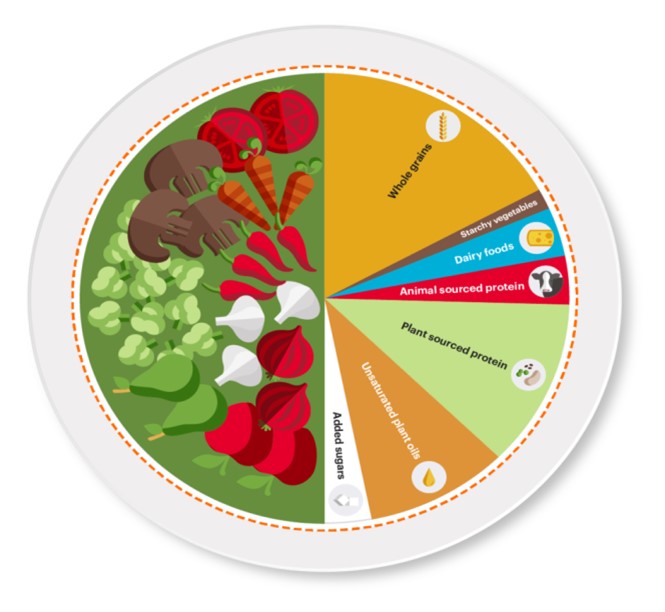
PLANetary Health Diet Day

The Planetary Health Diet and You: The EAT-Lancet Commission presents a global planetary health diet that is healthy for both people and planet. Discover the report’s key takeaways and specific actions that we all can take to contribute to the Great Food Transformation.

Source: https://eatforum.org/eat-lancet-commission/the-planetary-health-diet-and-you/

Leaner’s start off by discussing and criticizing EAT Lancet´s new model of 2020 and guidelines and of changing our habits for the Planet.

They will calculate their own nutrient needs, make a plan for a Healthy Planetary Diet Day and decide if they want to try it out.

This activity can be developed individually by learners or as a pair activity (2 learners) that shall be focused on the positive of a healthy diet for people and planet.

WiTECSweden

AUTHOR

  • January 28, 2021

PUBLISH DATE

View Resource

Techniques for a sustainable lifestyle. Calculate your CO2 footprint

Researchers recommend that an individual’s annual emissions of carbon dioxide equivalents must be 1 tonnes by 2050 if the goal of limiting the global average temperature increase to less than 2 degrees is to be achieved. Carbon dioxide equivalents are a measure of greenhouse gas emissions that take into account that different such gases have different abilities to contribute to global warming. In 2017, the figure was 6.7 tonnes per person within the EU, 13.5 tonnes for Canada, 16.3 tonnes for Australia and 16, 4 tons for USA.

We all have to contribute. Greta Thunberg speaks to us:

https://www.conservation.org/video/nature-now-video-with-greta-thunberg

This exercise can start as a group exercise and a kind of brainstorming and can then be performed individually. It is a conscious exercise about the things we invite in our homes and about the conscious choices we can make to have a sustainable lifestyle. The exercise should be seen as a kind of brain storming and ideas can be gathered. Several ideas will be presented in the exercise and for participants to practice in their own life for a month. Are they relevant for them or not?

WiTECSweden

AUTHOR

  • January 28, 2021

PUBLISH DATE

View Resource

Create techniques to: DO NOT WASTE

David Attenborough was interviewed together with climate activist Greta Thunberg after they released their films: “A life on our planet” (Netflix) and “Greta”. Finally they were asked what WE can do, but only to choose ONE thing: David answered:  “Do not waste” and Greta: “Learn more read about the problems and you will understand what to do, but put pressure on the politicians.” https://www.youtube.com/watch?v=fRFY4ss2W2A 

This exercise gives learners the opportunity to reflect on their own waste. How do I act and what can I change? It is an increase in awareness of what we can do ourselves and can also serve to further knowledge in the subject Waste. Habits are often difficult to change, but it is through our conscious choices we create a sustainable world:

EU: Goal 12. Responsible Consumption and Production

The 12th Sustainable Development Goal (SDG12) aims at ensuring responsible consumption and production patterns everywhere in the world, notably by:

Halving global food waste per capita and ensuring the efficient and sustainable use of natural resources by 2030

Fighting pollution, reducing the overall waste generation, and improving the management of chemicals and toxic wastes

Supporting companies’ transition to green infrastructures and practices

Making sure everyone everywhere is fully informed of ways to live in harmony with nature and eventually adopts thoughtful habits

Source: https://ec.europa.eu/international-partnerships/sdg/responsible-consumption-and-production_en

WiTECSweden

AUTHOR

  • January 28, 2021

PUBLISH DATE

View Resource

CrEATe raw delicious Art directly from the Natural world

Have you heard the word Fika? In Sweden we are known for “FIKA”. It’s when we take a break from work in the morning and in the afternoon or we go with friends to a café and eat some delicacy. It is easy for it to be a snack filled with so-called empty calories as in cakes and pastries. Therefore, in this activity of “FIKA” we will focus on nutrient density and to learn of additives in food. We prepare with only a high speed blender or a food-processor and a fridge/freezer.

The best snack is of course fruits.

This activity can be developed individually by learners or as a pair activity (2 learners) that shall be focused on the positive of a healthy diet for people and the planet.

Note for preparation that cashews for the Berry cake must soak overnight,

Note. That cakes needs to firm in the fridge before eating.


WiTECSweden

AUTHOR

  • January 28, 2021

PUBLISH DATE

View Resource
« Prev Page1 … Page36 Page37 Page38 Page39 Page40 … Page77 Next »

The European Commission support for the production of this publication does not constitute an endorsement of the contents which reflects the views only of the authors, and the Commission cannot be held responsi­ble for any use which may be made of the information contained therein.

Copyright © 2022 SAPPHIRE • All rights reserved

SAPPHIRE Website
en_GBEnglish (UK)
bg_BGБългарски pt_PTPortuguês it_ITItaliano lt_LTLietuvių kalba mk_MKМакедонски јазик elΕλληνικά en_GBEnglish (UK)