Skip to content
  • Home
  • Resources
    • Resource List
  • STEM Courses
    • STEM Educators
    • за STEM образователни работници
    • Professores STEM
    • Educatori STEM
    • εκπαιδευτές STEM
    • За STEM едукатори
    • All Courses
  • STEM Community Hubs
    • STEM in Cyprus
    • STEM in Lithuania
    • STEM in Greece
    • STEM in Italy
    • STEM in Portugal
    • STEM in North Macedonia
    • STEM in Bulgaria
  • Login
  • Register
  • Contacts
  • en_GBEnglish (UK)
    • elΕλληνικά
    • mk_MKМакедонски јазик
    • it_ITItaliano
    • pt_PTPortuguês
    • bg_BGБългарски
    • lt_LTLietuvių kalba
Menu
  • Home
  • Resources
    • Resource List
  • STEM Courses
    • STEM Educators
    • за STEM образователни работници
    • Professores STEM
    • Educatori STEM
    • εκπαιδευτές STEM
    • За STEM едукатори
    • All Courses
  • STEM Community Hubs
    • STEM in Cyprus
    • STEM in Lithuania
    • STEM in Greece
    • STEM in Italy
    • STEM in Portugal
    • STEM in North Macedonia
    • STEM in Bulgaria
  • Login
  • Register
  • Contacts
  • en_GBEnglish (UK)
    • elΕλληνικά
    • mk_MKМакедонски јазик
    • it_ITItaliano
    • pt_PTPortuguês
    • bg_BGБългарски
    • lt_LTLietuvių kalba

Retos

BUSCAR

Busca

AUTOR

TEMAS

PALABRAS CLAVE

IDIOMA

DURACIÓN

DIFICULTAD

Stepping into a virtual STEM class

Teachers, policy makers, and administrators in the educational field frequently face the issue of knowing how to properly engage and motivate students on various subjects. The eLearning resources, such as collaborative tools and educational platforms, have exponentially gained space inside the classrooms, due to their capability of fostering communication among students and with educators.

STEM skills can be obtained and practiced inside and outside of school. And there’s no better time than now to jump aboard the STEM train and introduce students to opportunities for creativity and innovation.

Online STEM activities know all about today’s digitally-minded students and appeals to them. These activities allow students play while learning, whether it’s an online experiment or a coding game. Students can also practice critical thinking skills by participating in online STEM activities.


Alan Smithee

AUTHOR

  • May 11, 2022

PUBLISH DATE

View Resource

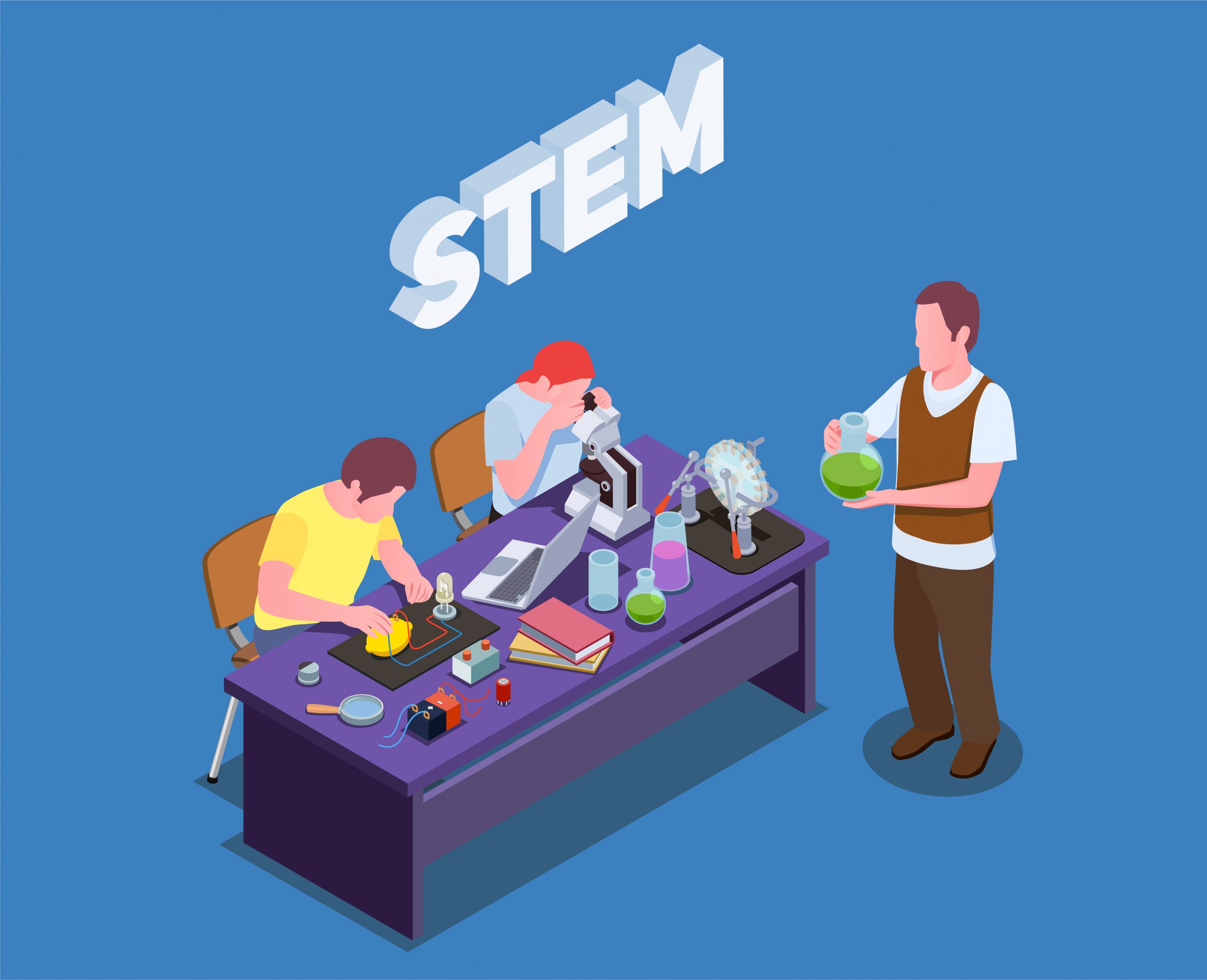
Into a STEM/STEM-like class

STEM education intends to encourage students to acquire the information, skills, and competences that are in need in the technology industry, as well as to contribute to their successful future realization. This is related to a new learning process organization, new teaching methods, new and integrated learning content, and teacher development and retraining.

The main goal is to improve students’ STEM skills, achievements, and engagement by providing opportunities for project-based learning and integrative knowledge, as well as to increase students’ interest in scientific topics and their willingness to continue their education in university specialties and work in the technology industry.

STEM lessons resemble science experiments and teaching in various ways. Genuine science experiences, after all, are inquiry-based and hands-on. However, there are also significant variances in the fundamentals of an “ideal” STEM session.

Here are six characteristics of a great STEM lesson:

-STEM lessons are focused with real-life difficulties and problems. Students confront real-world social, economic, and environmental issues and seek solutions in STEM classes.
-STEM lessons are guided by the engineering design process. This provides a flexible process that takes students from identifying a problem-or a design challenge-to creating and developing a solution and trying their own research-based ideas.
-STEM lessons immerse students in hands-on inquiry and open-ended exploration. The learning path in STEM lessons is open-ended but constrained. (Generally, constraints include things like available supplies.)
-STEM lessons encourage students to work together to solve problems.
-STEM lessons help students apply what they’ve learned in math and science. Students can thus realize that science and math are not separate courses, but rather that they work together to solve issues.
-STEM lessons allow for multiple right answers and reframe failure as a necessary part of learning. Failure is considered a positive step on the way to discovering and designing solutions.


Alan Smithee

AUTHOR

  • May 11, 2022

PUBLISH DATE

View Resource

Pros and Cons of the STEM Education Initiative

Here are some of the advantages and disadvantages of the STEM education initiative:
Pros:
1. Promotes equality in education. It benefits both male and female students equally.
2. Teaches independent innovation
3. Allows students to explore subjects at greater depth
4. Helps students develop critical and creative thinking skills
5. Allows for an integrated curriculum
6. Gifted students have high interest in these areas

Cons:
1. The initiative does not provide clear-cut guidelines for educators to follow.
2. Few elementary teachers are qualified to teach in the areas of math or science.
3. No national standards
4. No teacher certification
5. Can be costly
6. Comes at the expense of other subject matter
7. Most school systems do not teach integrated curriculums, therefore teachers do not know how to integrate

The STEM Education Initiative aims to engage all students in learning by allowing investigative and hands-on activities. The list of disadvantages demonstrates that the STEM Education Initiative falls short due to a lack of teacher expertise, curriculum, and financial support.

Alan Smithee

AUTHOR

  • May 11, 2022

PUBLISH DATE

View Resource

What is the Value of STEM Education?

STEM (science, technology, engineering, and mathematics) education goes beyond the classroom. It imparts a set of abilities that govern our thinking and behaviour. STEM education assists us in addressing today’s difficulties. Teaching children more than just science and math concepts. The emphasis on hands-on learning with real-world applications aids the development of a wide range of skills, including creativity and 21st-century competencies.

Media and technology literacy, productivity, social skills, communication, adaptability, and initiative are all examples of 21st-century skillsets. Problem solving, critical thinking, creativity, curiosity, decision making, leadership, entrepreneurship, and acceptance of failure are among the other abilities acquired through STEM education.

These skills go a great way toward teaching these students to be innovative, regardless of their future professional path.

Alan Smithee

AUTHOR

  • May 11, 2022

PUBLISH DATE

View Resource

What is STEM?

STEM is an abbreviation of Science, Technology, Engineering and Mathematics.

Science in STEM refers to the natural sciences (aka sciences that study the natural world, such as physics, chemistry and biology). Mathematics is used in a broader sense representing formal sciences (which also include logics and statistics). Technology and Engineering refer to the application of scientific knowledge to design, produce, and operate machines and other technical constructions for providing technical solutions and facilitating civilisation.

STEM education is more than just teaching the fundamentals of its various components. According to the National Science Teachers Association (NSTA), STEM education is “an interdisciplinary approach to learning where rigorous academic concepts are coupled with real-world lessons as students apply science, technology, engineering, and mathematics in contexts that make connections between school, community, work, and the global enterprise enabling the development of STEM literacy and with it the ability to compete in the new economy.”.

Alan Smithee

AUTHOR

  • May 11, 2022

PUBLISH DATE

View Resource

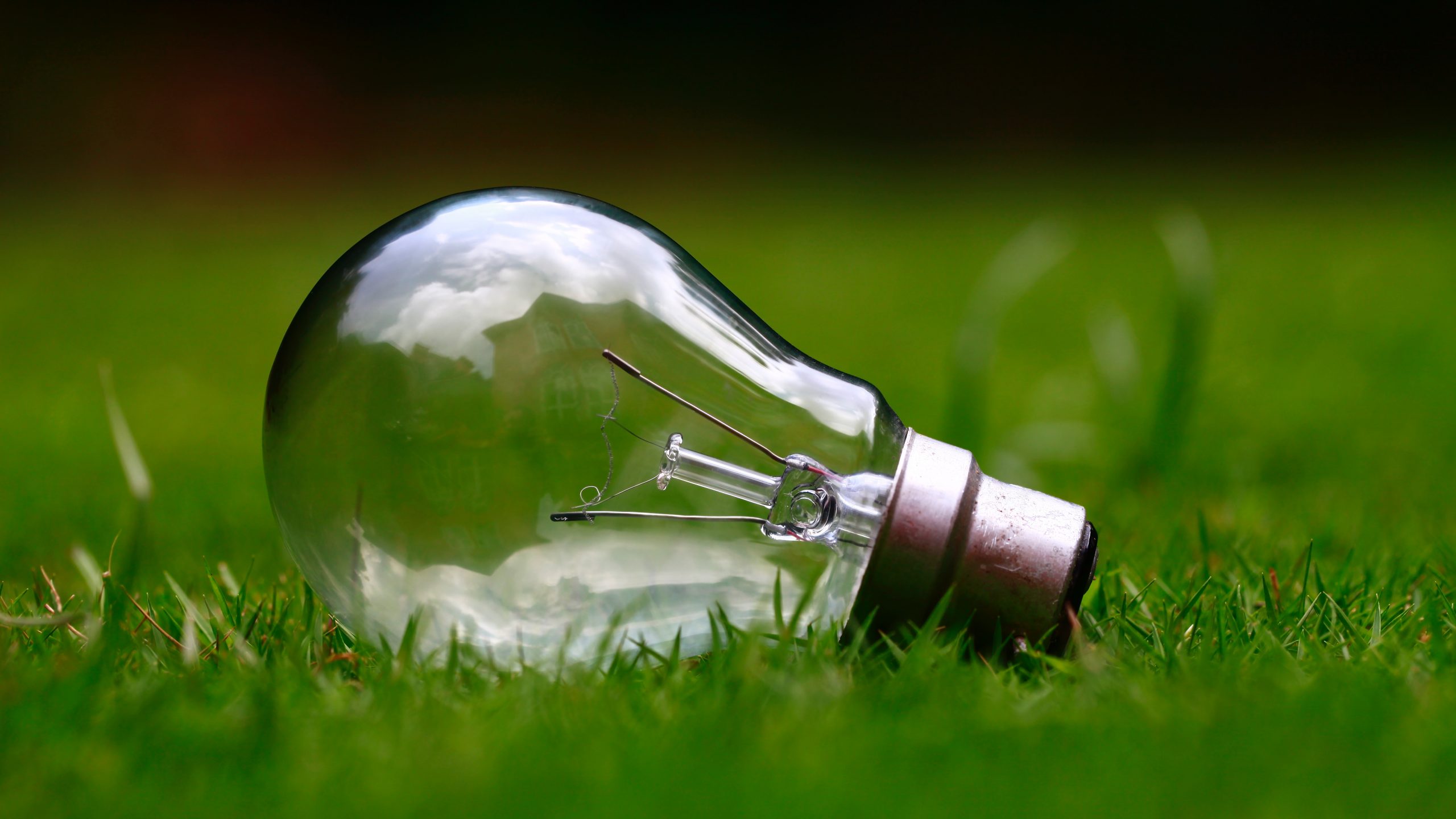
Como construir uma lâmpada que não depende de energia elétrica para situações de emergência

É comum sentir que a ciência e a tecnologia estão muito longe de nós. No entanto, isso não é verdade. A ciência e a tecnologia estão presentes em todos os aspetos das nossas vidas, e obter mais conhecimento sobre estas matérias, simplificaria as nossas vidas muito mais do que pensamos.

Através deste desafio prático, os alunos aprenderão sobre ciência e tecnologia e utilizarão estes conhecimentos de forma a fornecer uma solução prática para um problema que todos nós já vivenciamos. Eles irão aprender o que são condutores elétricos, entender a sua lógica e irão identificar alguns materiais que funcionam como condutores elétricos. Além disso, compreenderão a funcionalidade e a usabilidade que estes materiais têm.

Esta atividade deve ser desenvolvida individualmente ou com o apoio de um formador. Tem como objetivo demonstrar a importância de ter conhecimento sobre ciência e tecnologia no nosso dia-a-dia, ajudando os alunos a entender como criar uma lâmpada que não depende de energia para iluminar a sua casa de uma forma simples.


Virtual Campus

AUTHOR

  • August 3, 2021

PUBLISH DATE

View Resource
« Prev Page1 … Page3 Page4 Page5 Page6 Page7 … Page77 Next »

The European Commission support for the production of this publication does not constitute an endorsement of the contents which reflects the views only of the authors, and the Commission cannot be held responsi­ble for any use which may be made of the information contained therein.

Copyright © 2022 SAPPHIRE • All rights reserved

SAPPHIRE Website
en_GBEnglish (UK)
bg_BGБългарски pt_PTPortuguês it_ITItaliano lt_LTLietuvių kalba mk_MKМакедонски јазик elΕλληνικά en_GBEnglish (UK)