Skip to content
  • Home
  • Resources
    • Resource List
  • STEM Courses
    • STEM Educators
    • за STEM образователни работници
    • Professores STEM
    • Educatori STEM
    • εκπαιδευτές STEM
    • За STEM едукатори
    • All Courses
  • STEM Community Hubs
    • STEM in Cyprus
    • STEM in Lithuania
    • STEM in Greece
    • STEM in Italy
    • STEM in Portugal
    • STEM in North Macedonia
    • STEM in Bulgaria
  • Login
  • Register
  • Contacts
  • en_GBEnglish (UK)
    • elΕλληνικά
    • mk_MKМакедонски јазик
    • it_ITItaliano
    • pt_PTPortuguês
    • bg_BGБългарски
    • lt_LTLietuvių kalba
Menu
  • Home
  • Resources
    • Resource List
  • STEM Courses
    • STEM Educators
    • за STEM образователни работници
    • Professores STEM
    • Educatori STEM
    • εκπαιδευτές STEM
    • За STEM едукатори
    • All Courses
  • STEM Community Hubs
    • STEM in Cyprus
    • STEM in Lithuania
    • STEM in Greece
    • STEM in Italy
    • STEM in Portugal
    • STEM in North Macedonia
    • STEM in Bulgaria
  • Login
  • Register
  • Contacts
  • en_GBEnglish (UK)
    • elΕλληνικά
    • mk_MKМакедонски јазик
    • it_ITItaliano
    • pt_PTPortuguês
    • bg_BGБългарски
    • lt_LTLietuvių kalba

Test Challenge

SEARCH

Search

AUTHOR

TOPICS

KEYWORDS

LANGUAGE

DURATION

DIFFICULTY

STEM Equals

Exclusion and discrimination of underrepresented groups within STEM disciplines is a well documented problem. According to research, women, LGBT+, and ethnic minority academics in STEM face systemic inequalities, hostile working environments, biases, and obstacles to a successful career. Creating more inclusive STEM communities is not only the right thing to do, but it is also a basic requirement for thriving, innovative, and successful research.

STEM Equals is a four-year research and impact project focused on creating more inclusive STEM communities for women and LGBT people in both academia and in industry.
The project will examine working cultures in higher education and industry through an intersectional lens, including systemic inequalities faced by women and LGBT staff in STEM disciplines.

Adèle Seydoux

AUTHOR

  • May 11, 2022

PUBLISH DATE

View Resource

5 Simple Steps for Creating Stem Lesson Plans

STEM and STEAM is about integration and bringing all the pillars together to work as a whole, rather than as independent subjects. How can this be applied in a practical, straightforward manner?
STEM can be applied to a lesson in five steps:

#1 BRAINSTORM – Either alone as the teacher or as a group with your students, brainstorm the many ideas, topics and areas you could focus on within that umbrella topic.

#2 INVESTIGATE – Investigate the individual ideas as they relate to the main topic and see what connections you can draw. What areas overlap? How can you bring the individual ideas together in a way that makes sense?

#3 APPLY – Apply the 4 pillars of STEM – Science, Technology, Engineering, and Math, and consider adding the fifth pillar of Arts. Which ones can you bring into the lesson in a meaningful and relevant way?

#4 CREATE – Create and conduct your lesson. Be prepared for mistakes. Be prepared for exploration. Be prepared for the trials of discovery. STEM is inquiry and process driven.

#5 REFLECT – Reflect on what worked and what didn’t work after each lesson. Understanding what really engages your students and captures their interest, making them motivated learners.

Adèle Seydoux

AUTHOR

  • May 11, 2022

PUBLISH DATE

View Resource

Tips for Building STEM Lesson Plans

Even though the importance and benefits of STEM education are obvious, there are numerous difficulties and challenges that must be overcome when providing effective STEM lessons. Teachers who want to provide more engaging STEM lessons and activities will find these suggestions useful:

-Encourage exploration and teamwork among students in STEM lessons
-Use real-world problems or examples
-Clearly communicate goals and objectives
-Choose projects/lessons that are challenging but encourage failure
-Encourage hard work but emphasize the importance of breaks

Raymond Knowby

AUTHOR

  • May 11, 2022

PUBLISH DATE

View Resource

Why Is Stem Important? The Impact of Stem Education on Society

STEM education goes beyond school subjects and gives people skills that make them more employable and ready to meet the current labour demand. Combining science, technology, engineering, and mathematics, STEM education help us solve today’s problems.

STEM education connects these different disciplines into a unified system that provides students with a new attitude and abilities that are valuable in any job. They enable young people to be adaptable, search for patterns, make connections, and assess data. STEM education also helps to develop social awareness. It communicates global issues to the general public. As a result, STEM possibilities help us transition to a knowledge-based economy with improved environmental literacy.

Raymond Knowby

AUTHOR

  • May 11, 2022

PUBLISH DATE

View Resource

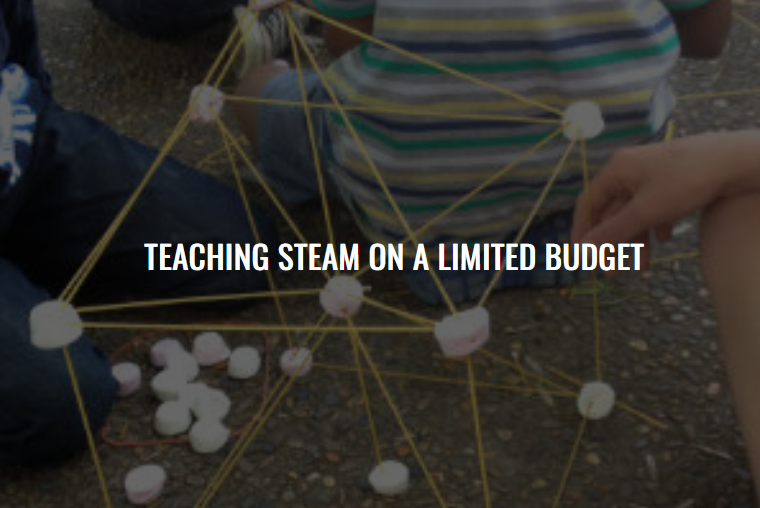
Teaching STEAM on a limited budget

It is not necessary to follow the textbook when teaching science in the classroom. Allowing children to solve a scientific problem in their own way and seeing where their discoveries lead them is the best method to fully interest them in the sciences. The main problem in the classroom is that you don’t always have access to all of the materials, and it’s easy to become discouraged when you hear about the amazing things that individuals with larger school budgets are doing.

The good news is that, in many ways, a lack of expensive resources isn’t a limiting factor since, as long as you interest the children with a problem worth addressing, they’ll be just as pleased working with simple materials as they are with expensive things.

‘Water bomb or egg drop challenge’, ‘Wooden ice-cream stick bridges,’ ‘Marshmallow & Spaghetti towers,’ or ‘Build the highest cup tower’ are examples of low-budget challenges.

Beyond learning to work with materials on a design challenge, a major outcome is that kids can learn through failure. While it may seem nice for students to have constant success in their experiments, having consistent success while completing textbook experiments does not teach your students about coping with obstacles when not all of the variables are known.


Raymond Knowby

AUTHOR

  • May 11, 2022

PUBLISH DATE

View Resource

Practicing STEM in simulation/virtual lab environment

Virtual lab environments use computer programs to simulate series of experiments without physically doing them. It provides students with tools, material, and laboratory set virtually on the computer to carry experiments subjectively anytime and anywhere. Virtual labs can help students to explore and visualize abstract concepts in science application.

A virtual lab:
-Enables students to create alternative experiments because of the time and cost efficiency.
-Enables students to achieve understanding on macroscopic to sub microscopic, and symbolic level.
-Provides dynamic representation of sub microscopic particles.
-Contributes to a better understanding on chemical compounds.
-Strongly motivates students.

Virtual labs can also help students enhance their conceptual thinking and investigative skills.

Students who learn using simulations do better than those who learn through other methods, and adding more guidance to a simulation, especially scaffolding, and using multiple representations improves students’ performance even more.

Learning with online labs is often more effective for acquiring conceptual knowledge than learning in real laboratories when guidance is added.

Raymond Knowby

AUTHOR

  • May 11, 2022

PUBLISH DATE

View Resource
« Prev Page1 Page2 Page3 Page4 Page5 Page6 … Page77 Next »

The European Commission support for the production of this publication does not constitute an endorsement of the contents which reflects the views only of the authors, and the Commission cannot be held responsi­ble for any use which may be made of the information contained therein.

Copyright © 2022 SAPPHIRE • All rights reserved

SAPPHIRE Website
en_GBEnglish (UK)
bg_BGБългарски pt_PTPortuguês it_ITItaliano lt_LTLietuvių kalba mk_MKМакедонски јазик elΕλληνικά en_GBEnglish (UK)